Featured

Math Lesson

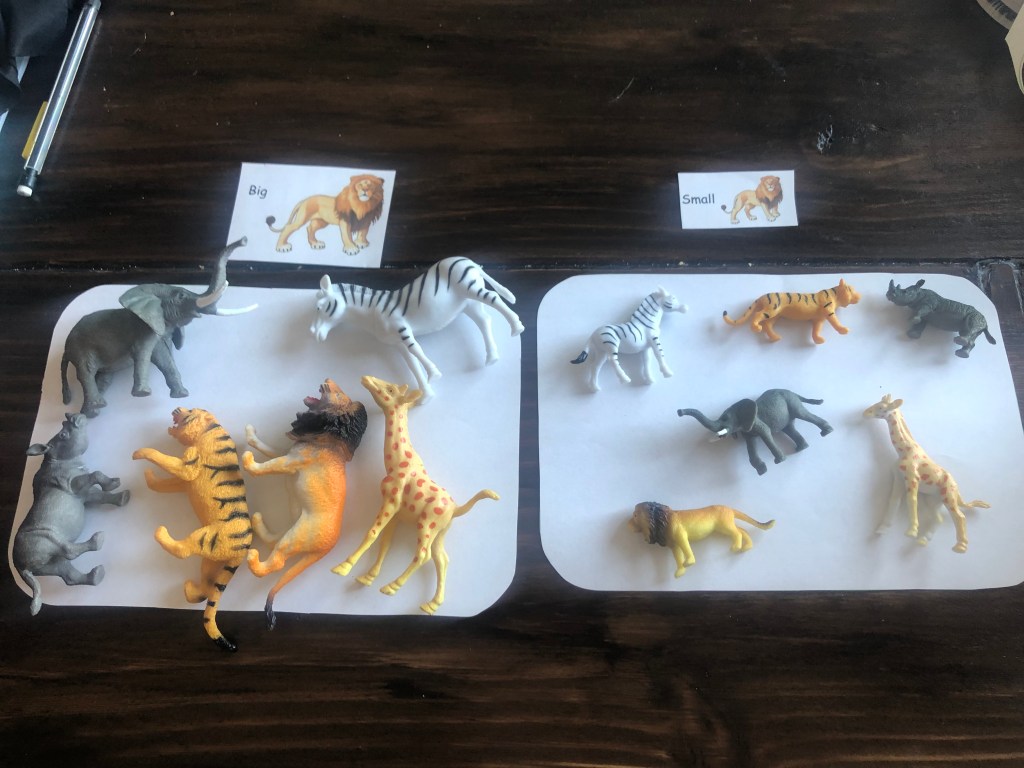
Animal Sort

Standards:

  • K.1.1.1 Numbers and Operations: Understand the relationship between quantities and whole numbers up to 31.
    • Benchmark: Recognize that a number can be used to represent how many objects are in a set or to represent the position of an object in a sequence.
  • K.1.2.1 Number and Operation: Use objects and pictures to represent situations involving combining and separating.
    • Benchmark: Use objects and draw pictures to find the sums and differences of numbers between 0 and 10.

Rationale: The purpose of this activity is to allow the student to collaborate with their table/small groups and practice sorting jungle animals based on different characteristics. The students will then be counting and identifying how many animals are in each group by a number, which their group will write down on either a piece of paper or a whiteboard. The students will get practice in sorting and correlating objects with a number which fits in with the first standard. Once they sort animals by 2 characteristics (stripes and spots, Etc.) they will then work together and count/add up all of the animals that are on the place mat after sorting and identifying how many animals are in each group. After all of the teacher directed categories are gone through, the students will get the opportunity to look at the animals they have, and try to come up with their own categories for sorting. This provides a little inquiry along with teacher directed, utilizing jungle animals as a manipulative.

Materials:

Place mats X2

Sorting labels (stripes, spots, grey, yellow, big, small)

Recording Sheet

Pencil

Interactive smartboard or doc cam to display examples

Jungle animals

Groups

Motivation:

Hello my friends! We have been talking a lot about our jungle animals lately. I have a question for you! Do all jungle animals look the same? Why or why not? What makes these animals unique/different from each other? These are called characteristics. That is a big word, but you are all so smart that I know you can handle it. Teacher will explain what a characteristic is using herself as an example. (I have blonde hair, I have blue eyes, I have long hair, etc.) Teacher will then display 2 different animals on the board and ask students what some of their characteristics are. Exactly, you are all becoming masters at finding characteristics that makes them special! Well today, I am going to give you many different animals to look at, and we are going to practice sorting your animals based on some characteristics and then counting how many there are!

Activity Procedure:

  1. To begin the lesson, hand out place mats, jungle animals, and sorting labels to the groups. Allow a minute of brief discussion on what kinds of characteristics they see in their animals. Each group will get the opportunity to share one of their characteristics they see.
  2. The teacher will model how the activity will take place either by using a doc cam/interactive board so the students are able to see how the sorting process takes place.
  3. The students are directed to take out the stripes and spots labels and place them above the place mats.
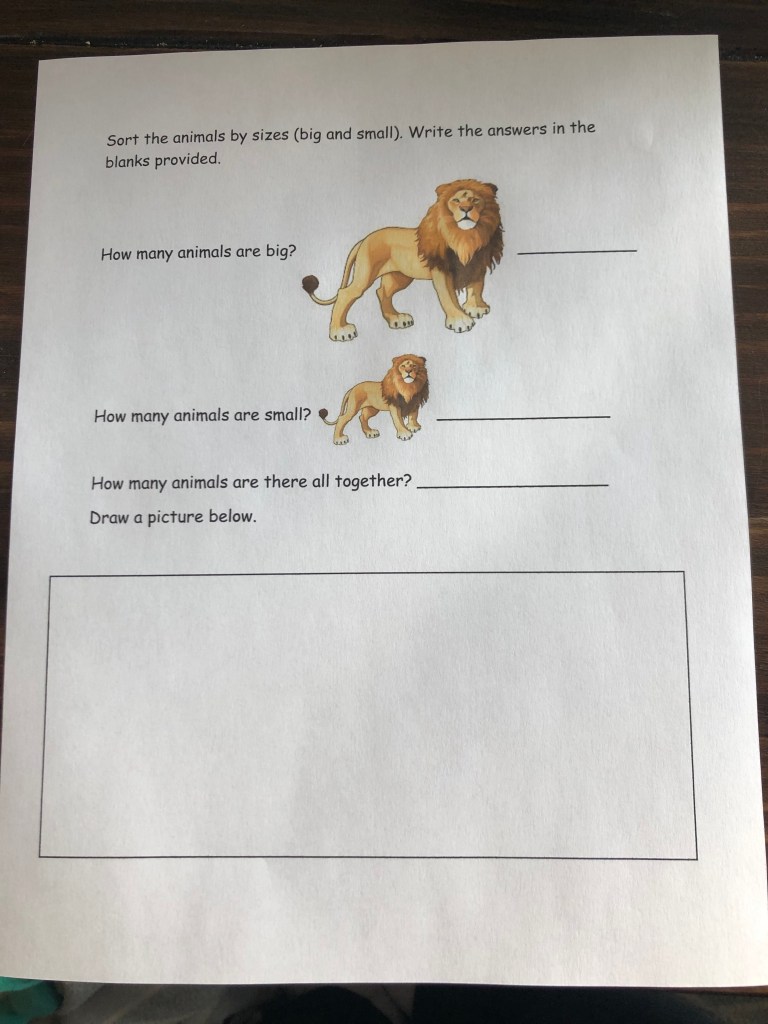
  4. As a group, the students will begin sorting the animals based on their characteristics. Once the animals are sorted by the groups, they will need to take out their first answer sheet. With the guidance of the teacher, the students will record their answers by counting how many animals are in each section. Once they have that, the students will then have to count all of the animals to see how many animals there are total with patterns. They will be able to draw a picture on the answer sheet if time allows showing how they figured it out.
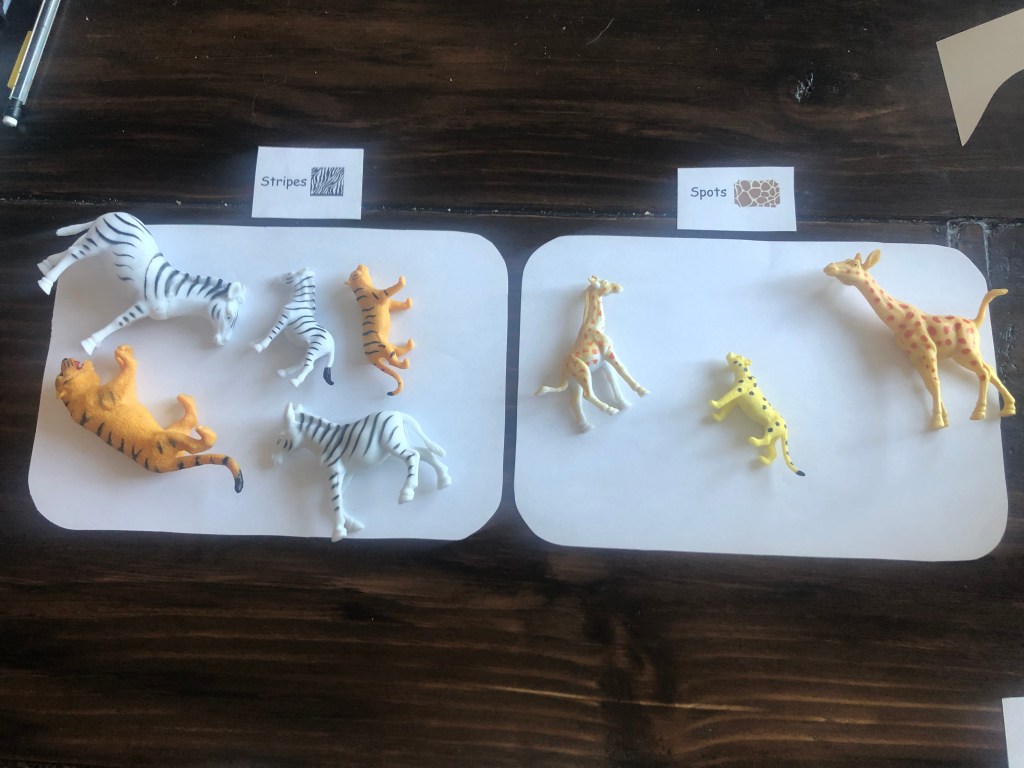
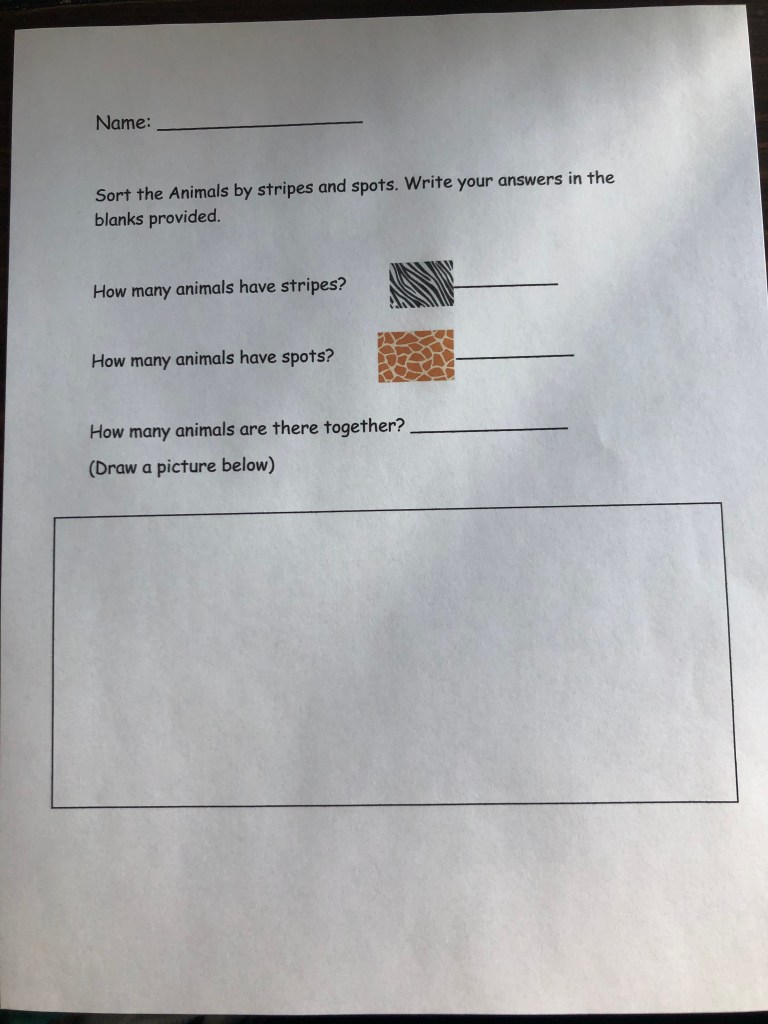
5. The students will go through the same process sorting the animals based on their color (grey or yellow) and their size (big or small).
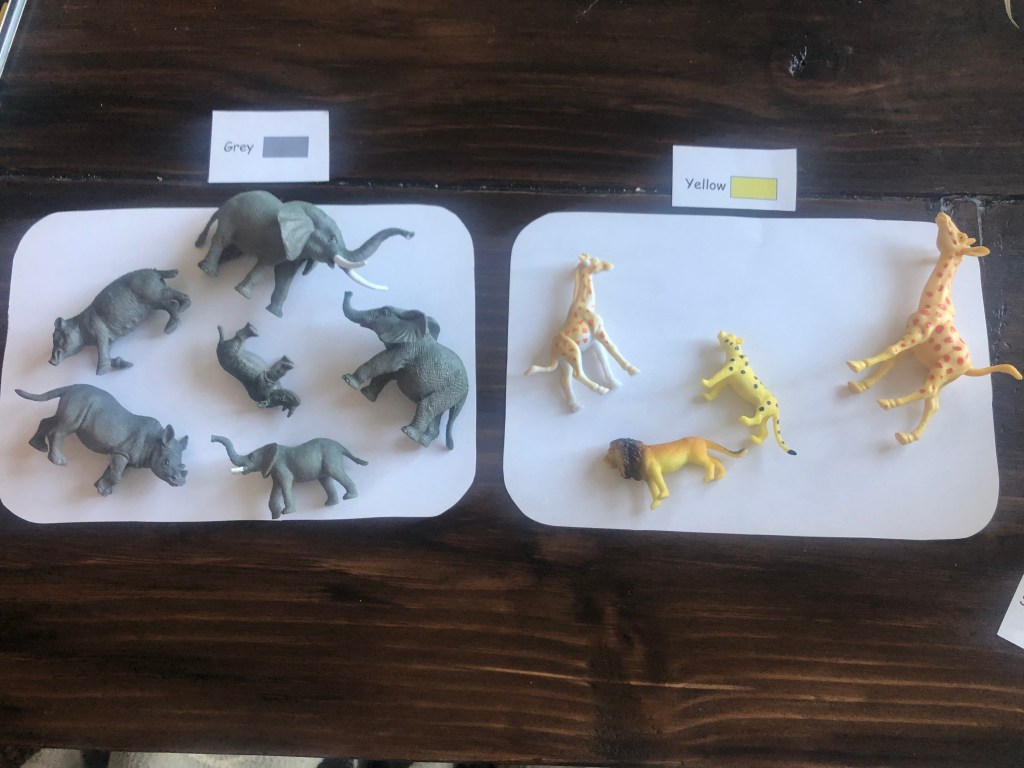
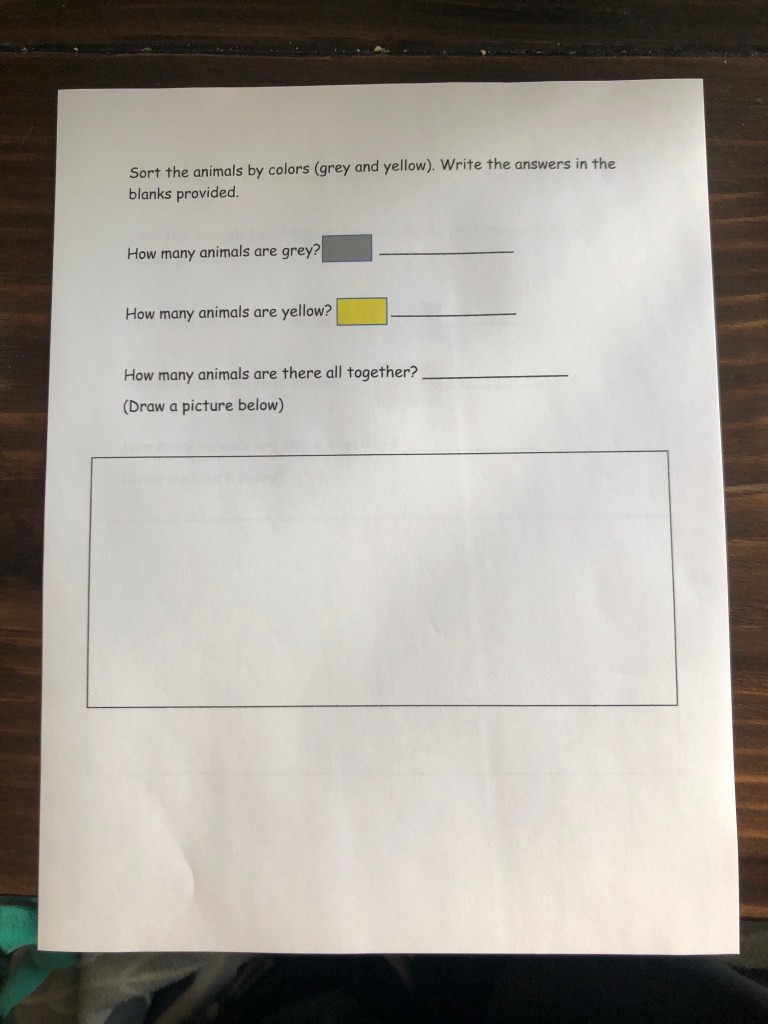
6. If time allows, the children will be able to utilize their group members and collaborate on any other possible characteristics they could group their animals by. This provides a little bit of inquiry to allow the students use what they learned and identify characteristics.

The idea was found while searching pinterest. The place mats/labels and recording sheets were all created by me.
Additional Activities

  • Feed the monkey counting game:
    • This math activity allows the students to “feed” the monkey the bananas. There are number cards that tell the student how many bananas to feed the monkey. Using a plastic tweezers, the students pick up the bananas and feed them to the monkey, counting out loud as as they go.
  • Wild Animal Pattern Block Safari
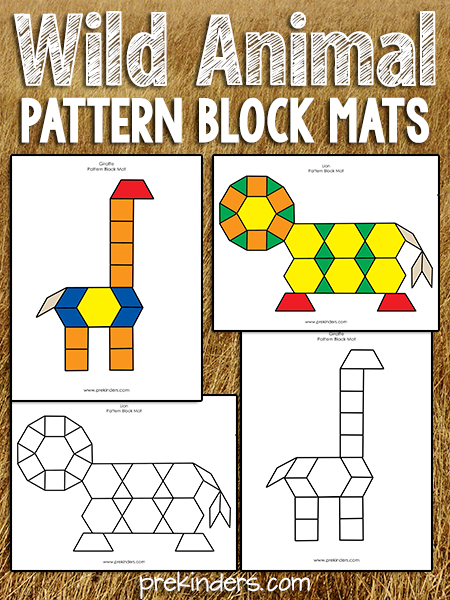
Wild Animal Pattern Block Mats
Jungle Numbers Write the Room Fun-Differentiated and Common Core Aligned
Who Lives in the Jungle?  (An Interactive Build-A-Word Book for K-1)
  • Jungle and Safari Kids Yoga
Image result for jungle safari yoga
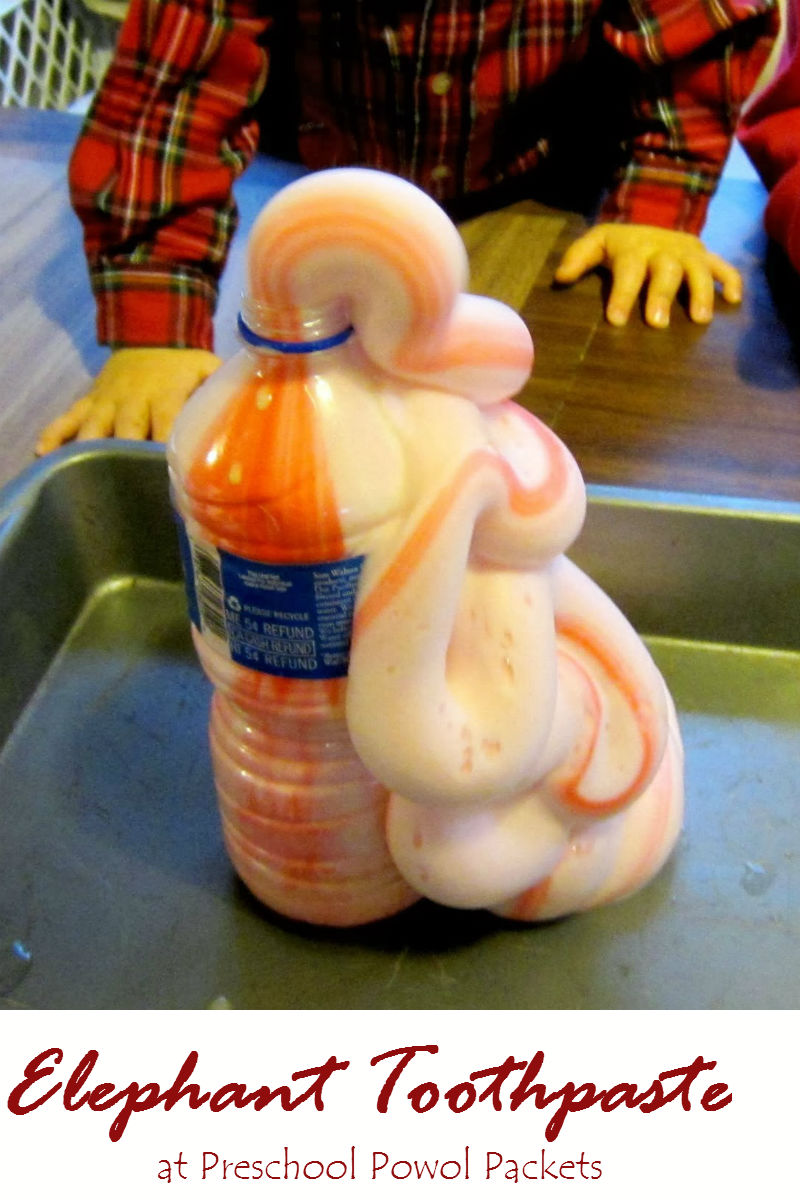
Image result for elephant toothpaste
Match the Fur to the Zoo Animal – Visual Discrimination Science Activity
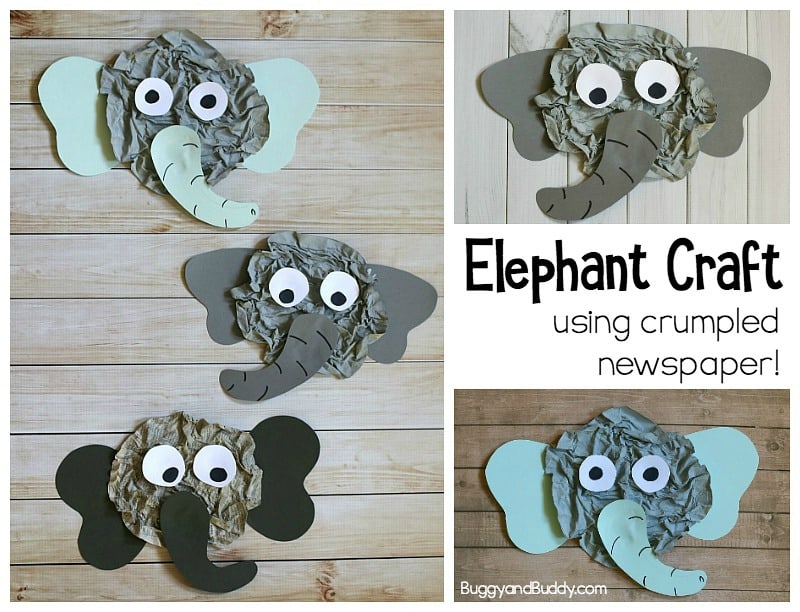
elephant craft for kids using newspaper
Giraffe Neck Stack | Fine Motor Counting
Rainforest

Jungle Children’s Books

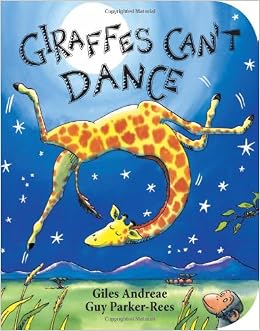
  1. Giraffe’s Cant Dance by Giles Andreae
Image result for Giraffes cant

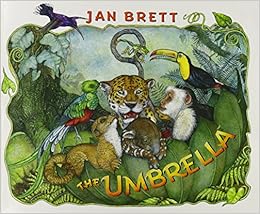
2. The Umbrella by Jan Brett

Image result for the umbrella by jan brett

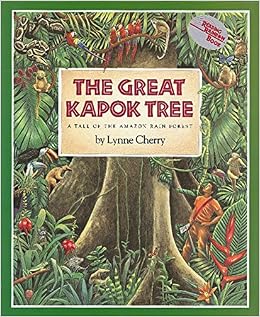
3. The Great Kapok Tree by Lynne Cherry

Image result for the great kapok tree

4. If I Ran the Rain Forest: All About Tropical Rain Forest’s by Bonnie Worth

Image result for if i ran the rain forest

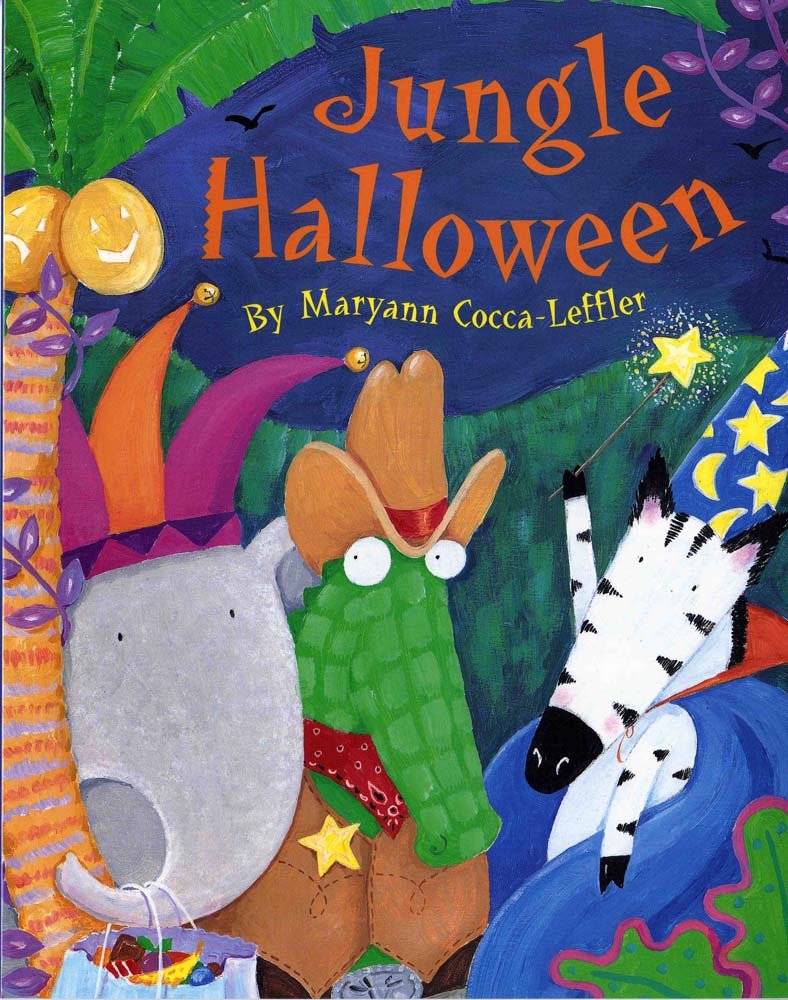
5. Jungle Halloween by Maryann Cocca-Leffler

Image result for jungle halloween book

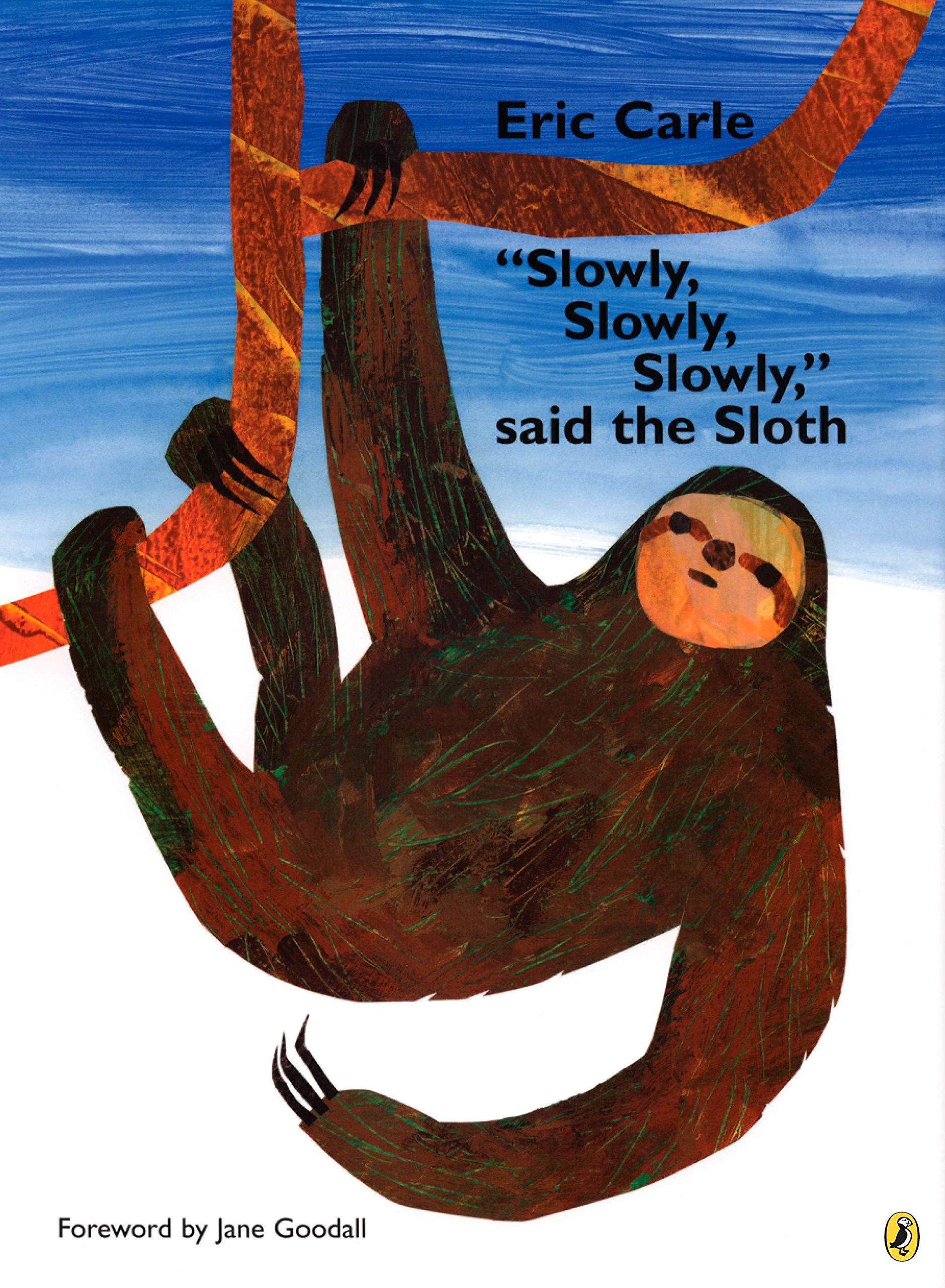
6. Slowly, Slowly, Slowly said the Sloth by Eric Carle

Image result for slowly slowly slowly said the sloth

7. Rumble In the Jungle by Giles Andreae

Image result for jungle theme books

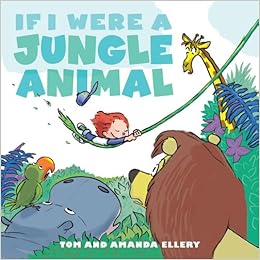
8. If I were a Jungle Animal by Amanda Ellery

Image result for if i were a jungle animal

9. What to do If an Elephant Stands on Your Foot by Michelle Robinson

Image result for if i were a jungle animal

10. Over in the Jungle by Marianne Berkes

Image result for over in the jungle

Poems, Songs, and Finger Plays

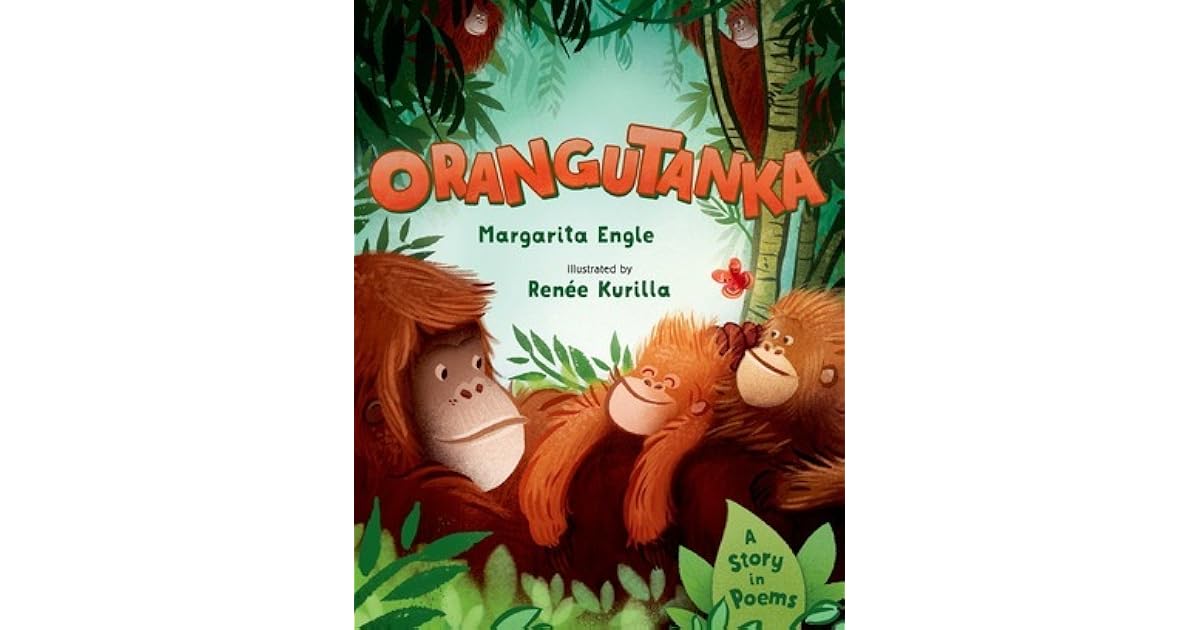
  1. Orangutanka by Margarita Engle: This is a story in poems. This book can be used to talk about how poems look different and it is a fun little read aloud book.
Image result for orangutanka

2. 5 Little Jungle Critters https://www.youtube.com/watch?v=PX9drOXTzV0&feature=youtu.be This is a video of a felt board story. This is a good alternative story to listen to either during quiet time or during circle time.

3. Jungle Songs and Music http://www.everythingpreschool.com/themes/jungle/songs.htm This is a great list of songs that can be sung during morning meeting/circle time or as a transition time. The lyrics to the songs can also be used as a learning activity.

4. Walking in the Jungle https://www.youtube.com/watch?v=Kd5f8iifS-4

5. The Animal Boogie https://www.schooltube.com/media/t/1_gfcdcdz5 This song can be used as an interactive circle time song. It can also be used as a brain break before transitioning.

6. We’re Going on a Lion Hunt https://www.youtube.com/watch?v=03i5v1PS7P4 This is a fun, interactive song/story that can be used during circle time.

7. https://www.poemsearcher.com/topic/jungle This poem can be used for a language arts lesson, and can be hung in the room.

Image result for jungle poems

8. https://www.pinterest.com/pin/515028907358394849/?lp=true This song/poem is similar to “The Itsy Bitsy Monkey” which could be a good use of background knowledge when talking about poems and monkeys.

Image result for jungle poems for kindergarten

9. https://www.pinterest.com/pin/809170258022902227/?lp=true This is an interactive poem that can be read to the students. This poem can be used to talk about poems and used to comprehend poems.

Image result for jungle fingerplays

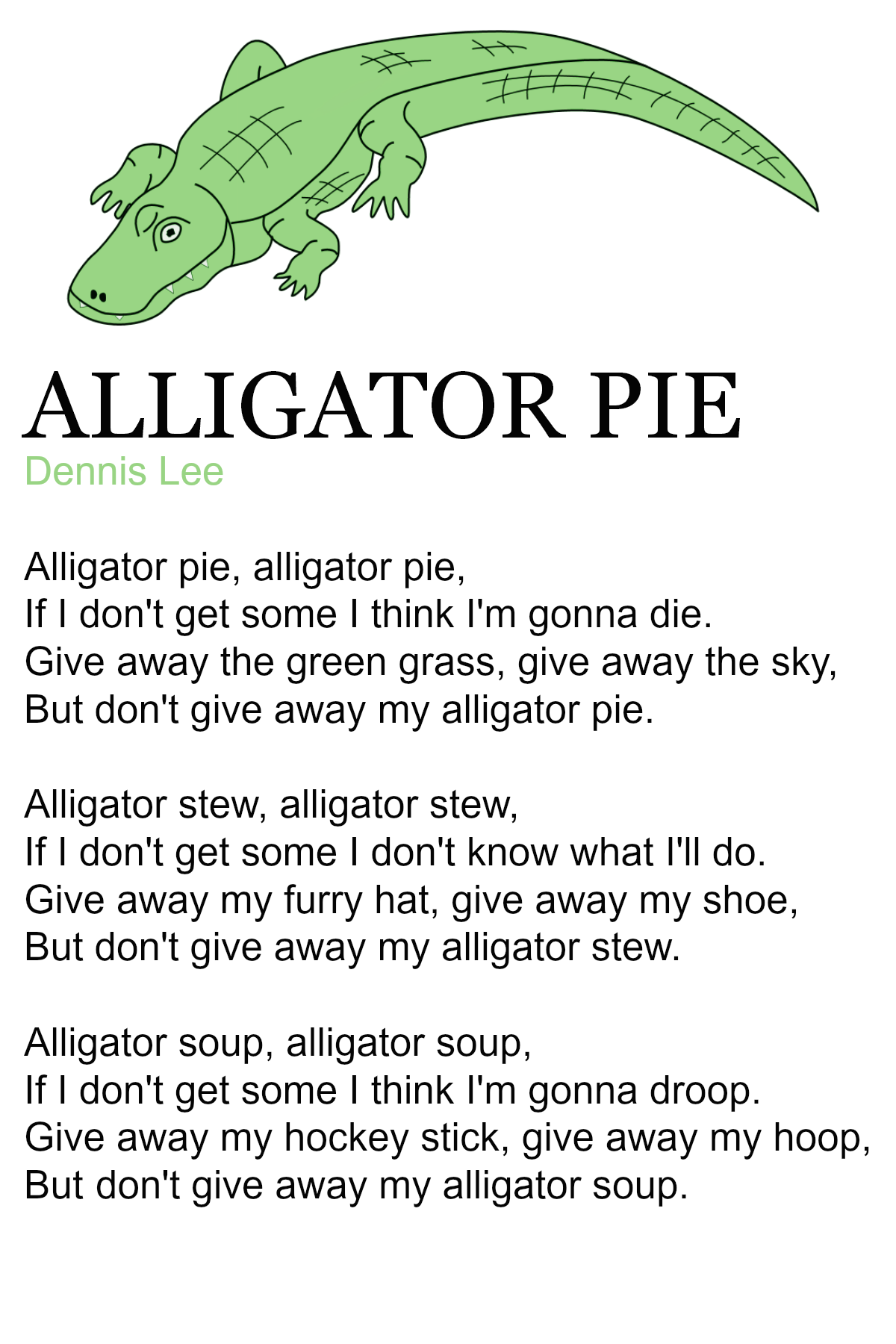
10. https://www.poemsearcher.com/topic/alligator This is a fun poem that can be used to talk about word families and rhyming words.

Image result for short alligator poems

Center Activities

Math: Play-do jungle number mats

Standard/Rational:

K.1.1.2 Understand the relationship between quantities and whole numbers up to 31.

Benchmark: Read, write, and represent whole numbers from 0 to at least 31. Representations may include numerals, pictures, real objects and picture graphs, spoken words, and manipulative’s such as connecting cubes.

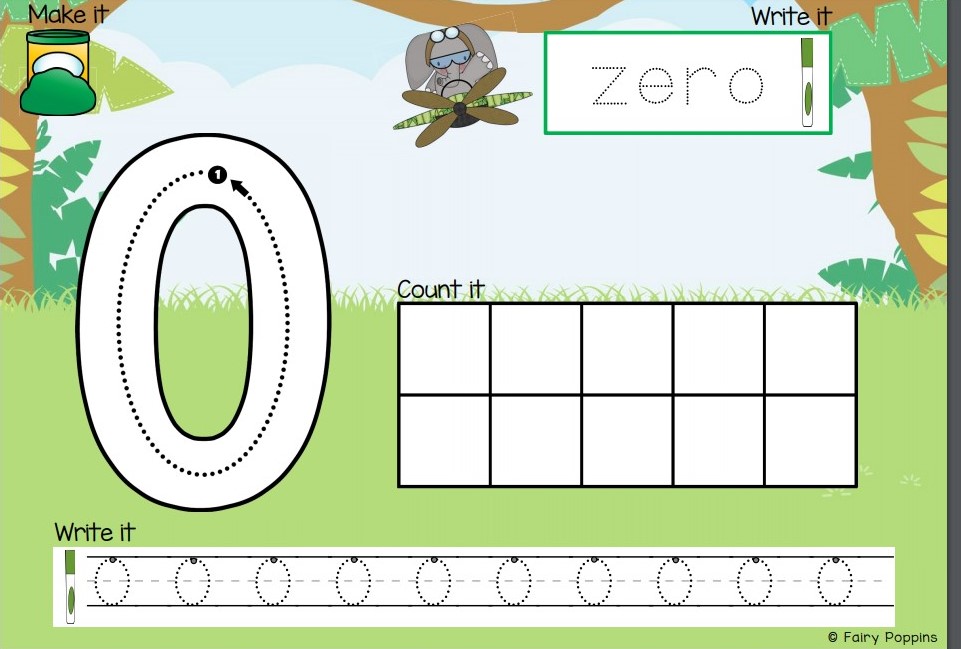
The students will get the opportunity to identify what number they have chosen and then build that number in 3 different ways. They will need to write the number out, build it out of play-doh, and count out jungle animals to place in the 10-frame. This helps build their number sense.

Motivation:

Hello Friends! We have been working really hard on our numbers. I know that we love to use play doh and build things with it. Now, we are going to be able to build our numbers in different ways. One of them includes play-doh! You get to use your whiteboard marker and play-doh to practice our numbers in order to become masters!

Materials:

  • Number Place Mat
  • Expo Marker
  • Jungle Animal Counters
  • Die

Steps:

  1. Students begin by rolling the die to figure out what number card should be grabbed.
  2. The student identifies the correct number mat and begins by building the number out of play-doh and placing it on the correct spot on the mat.
  3. The student then begins by writing the number in words.
  4. The student then goes to the bottom of the mat and practices writing the number out on the number line.
  5. Students then take the jungle animals and count out the number on the 10-frame.

This was saved from teachers pay teachers by Fairy Poppins. https://www.teacherspayteachers.com/Product/Jungle-Math-Centers-0-to-20-Addition-Subtraction-1956974

Literacy: Feed the Lion

Rationale/Standard

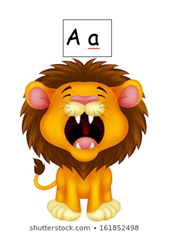
The students will use the beginning letter sound of pictures and match it with the letter sound that is shown on Lily the Lion. This works on their phonics and phonemic awareness in spoken language.

Materials:

  • Lion cutout
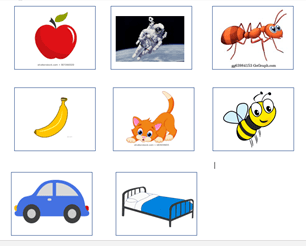
  • Picture cards

Motivation:

Okay friends, I know it is getting close to lunch time and we are all getting hungry. This includes our friend Lilly the lion! In our center today, we need to make sure our lion friends are fed so they are happy! Your job is to feed the lions the correct food so they are happy and ready for the rest of the day!

Steps:

  1. Students will separate out all of the picture cards.

2. Students will look at the upper case and lower case letters on the lions.

3. Students will sort the pictures into the correct lions mouth.

4. For students to check their own work, you can put different colored dots on the back.

5. To differentiate for different needs, you can include more advanced concepts such as blends for those students who are advanced in single letter beginning sounds.

I found the idea for this center on pinterest.

Art Project

Paper Plate Snake Art

Standard/Rationale

0.2.1.5.1 Create original two- and three- dimensional artworks to express ideas, experiences or stories.

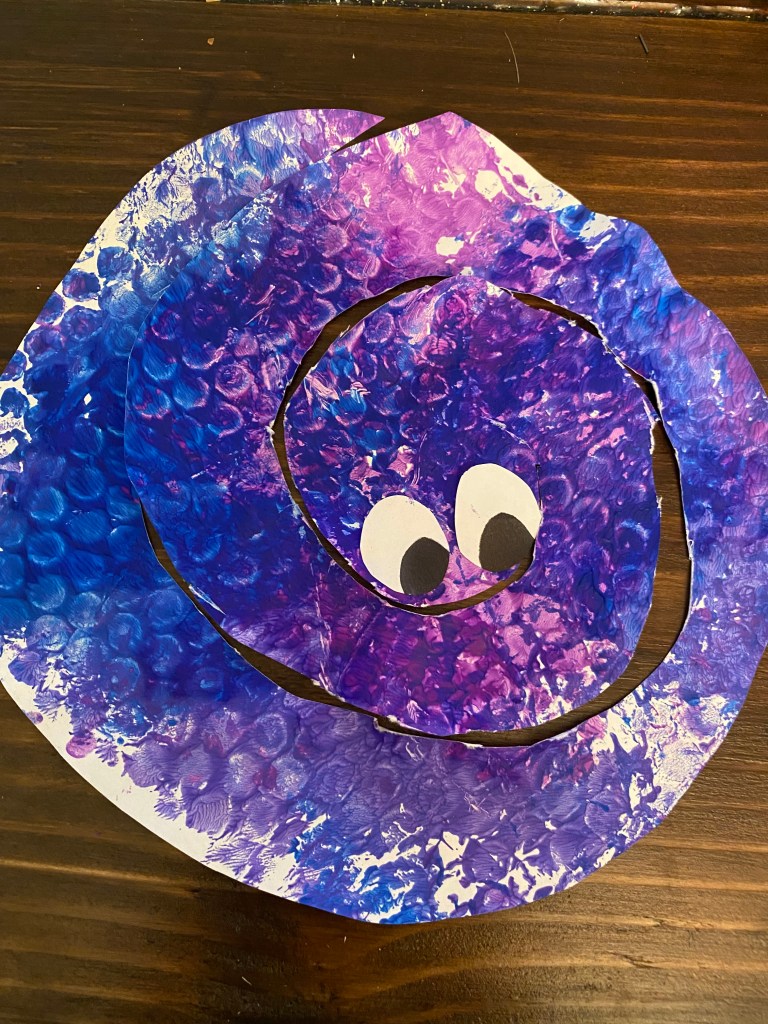
Students will be able to create snakes out of paper plates. They will be using bubble wrap to create a print on a paper plate. They will be using different media to print and will also work on their fine motor skills when it comes to cutting out the snake.

Materials

  • Paint
  • Paint Brushes
  • Bubble Wrap
  • Paper Plate
  • Scissors
  • Googly Eyes
  • Glue
  • Red Paper
  • Plastic cups/paint trays

Motivation

Hello my friends! Today, we are going to make our own versions of snakes. We have been learning a lot about them, but now we are going to create our own. We are going to be using paint, so we need to be extra careful! How many of you like to play with bubble wrap? I know it is satisfying to pop them, but today we are going to be using them as our paint brushes! Let me show you how!

Steps:

  1. Each student needs to gather materials. 1 paper plate, 1 piece of bubble wrap, 1 paint brush.
  2. Students can choose 1-4 colors of paint, teachers will need to put pain on the paint tray for that student.
  3. Using the paint brush and bubble wrap, put paint on the bubble wrap. Make sure that there is enough paint on the bubble wrap that it prints the design and texture onto the plate.
  4. Continue printing paint on the paper plate until the desired color and design is complete.
  5. Let the paint dry, then cut the plate into a spiral to create the snake look. Make sure to stop once you get to the middle of the plate to create the head of the snake.
  6. Once the snake is cut, cut out the snakes tongue.
  7. Glue the tongue and the 2 googly eyes on the snakes head.

This idea was found on pinterest.

Communication Tool

Class Pet! Ellie the Elephant (Homework Bag)

Rational:

0.6.3.3 Use a combination of drawing, dictating, and writing to narrate a single event or several loosely linked events, tell about the events in the order in which they occurred, and provide a reaction to what happened.

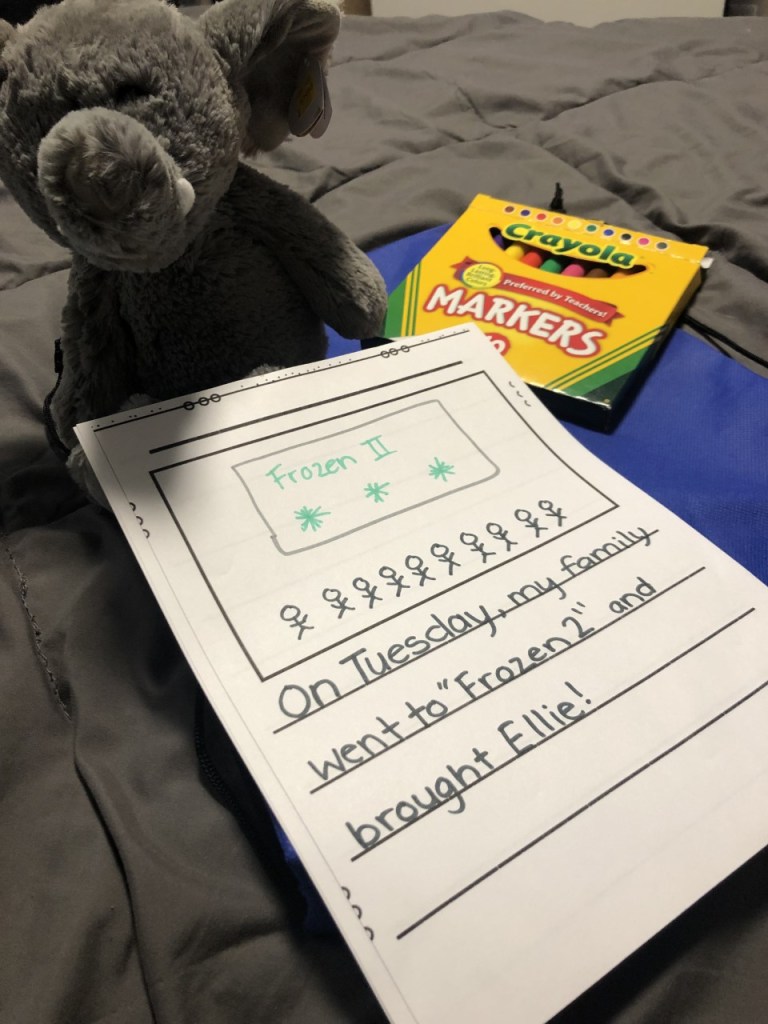
Our stuffed animal class pet, Ellie the Elephant, will get the opportunity to go home with 1 student per week. They get to go on the wonderful adventure! This tool allows for parent and student involvement. The parents get to help the student write out the class pets adventure while in their home. The students will be able to draw a picture and write at least one sentence about what they did together. This allows the parents to see the students progress as well as play a role in helping their child complete an assignment. Prior to sending the class pet home, a parent letter will be sent out with the explanation of the assignment as well as the dates their child will have the class pet. Another reason for this as the teacher, you get to see a small glimpse into the child’s life while encouraging family participation. This can be adapted for many different homework bags throughout the year. Along with the bag, comes a monthly/weekly parent newsletter. All students will receive this news letter, some will just not get it in this homework bag.

Materials:

  • class pet
  • String bag
  • journal pages
  • pencil
  • coloring utensil
  • parent letter
  • schedule

Motivation:

Hello my friends! Now I know we have been learning about different jungle animals and how they do not live here in MN unless they are in a zoo. Except I forgot about our class pet!!! Our class pet is Ellie the Elephant. Lets meet him! (Teacher reads a letter from the class pet to the class explaining what it going to happen.) All of you will get the opportunity to take our very own Ellie home with you on an adventure! Ellie is so excited to meet your families, and I am excited to see all of the new adventures that Ellie gets to go on!

Description:

In a drawstring bag, there will be Ellie the Elephant, journal pages for the whole class, a pencil box filled with coloring utensils and pencils, and a parent letter describing how to help out their child with this assignment. One child a week will be given the bag and get the chance to bring it home. They get to bring Ellie with wherever they go. The child will then draw a picture and write at least one sentence on their favorite activity they did with Ellie. If appropriate, the parents can dictate what the child says. Ellie will need to be brought back by the Friday of that week so on Friday, they can share with the whole class their picture and what they did with Ellie. They can also take a picture with Ellie and bring it in to show the class as well. This works on the students writing skills as well as their oral speaking skills.

I got this idea from my Elementary Methods class with Sue Ellingson. We did a variation of this in our language arts class. I adapted it to make it fit my jungle theme and for the age of the students.

Literacy and Vocabulary Project

Rumble in the Jungle, by Gileas Andreae

Rationale:

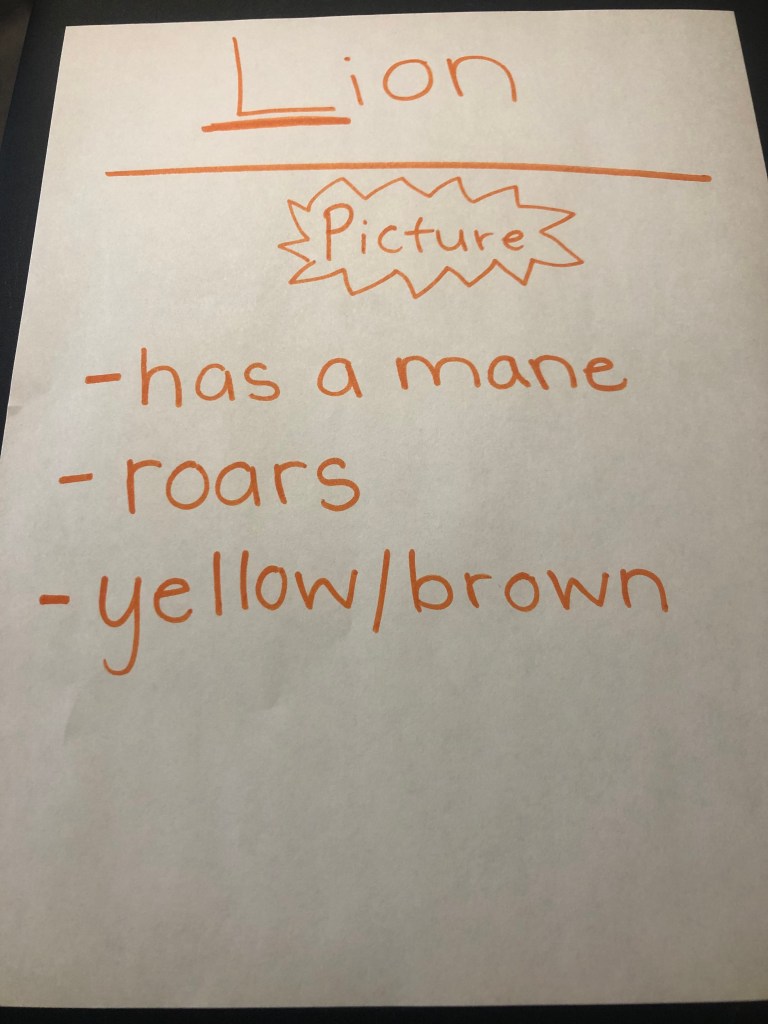
This activity should be done over the course of a week, maybe 2. We will read the book as a group and revisit the book over the course of the week and learn about all of the different animals. Pointing out the big animal words and providing a chart with a picture and characteristics will help the students take note of the animals and begin to learn. To aid this lesson, it would be helpful if the students are able to associate the beginning letter with the animal. For example, H for Hippo, A for alligator, C for Chimpanzee, etc.

Materials:

  • Rumble in the Jungle book
  • Chart Paper
  • Marker
  • Animal name cards
  • Animal Pictures

Vocabulary

  • Chimpanzee
  • Giraffe
  • Zebra
  • Lion
  • Hippopotamus
  • Elephant

Procedure

  1. To begin this lesson, read the story to the children. Address any unknown vocabulary during the reading and have discussions throughout the shared reading with the children.
  2. Over the course of the week, take the time to write the animals from the book on a piece of chart paper that has the animals picture, underlining the beginning letter of the word, and write down characteristics of this animal along with pictures.

3. Make sure to review the words and the characteristics/pictures.

4. At the end of the lesson, to practice matching the word with the animals, each student will be given a picture of an animal. Multiple children may have the same picture, these students are to group up together. I will have a list of the words. The students should sit with their groups and work together to try and figure out what animal they have.

5. Teacher will say the name of the animal, and the group who has the picture of that animal should stand up. They need to tell the class how they knew what animal they have. What characteristics they had. We will then put the picture and word on the board so the whole class can see.

Crocodile SNAP! Letter Recognition

Standards:

  • 0.10.1.1 Demonstrate command of the conventions of standard English grammar and usage when writing or speaking.
    • Print many upper- and lowercase letters.

Rationale:

This activity can be used as a small group activity, during small group workshop time, or as a center game. This game can be varied for many different things such as word-families, letter sounds, etc. This is an activity that has the students recognizing both upper and lower case letters and matching them with each other. They will say the letter aloud and match the letters.

Materials

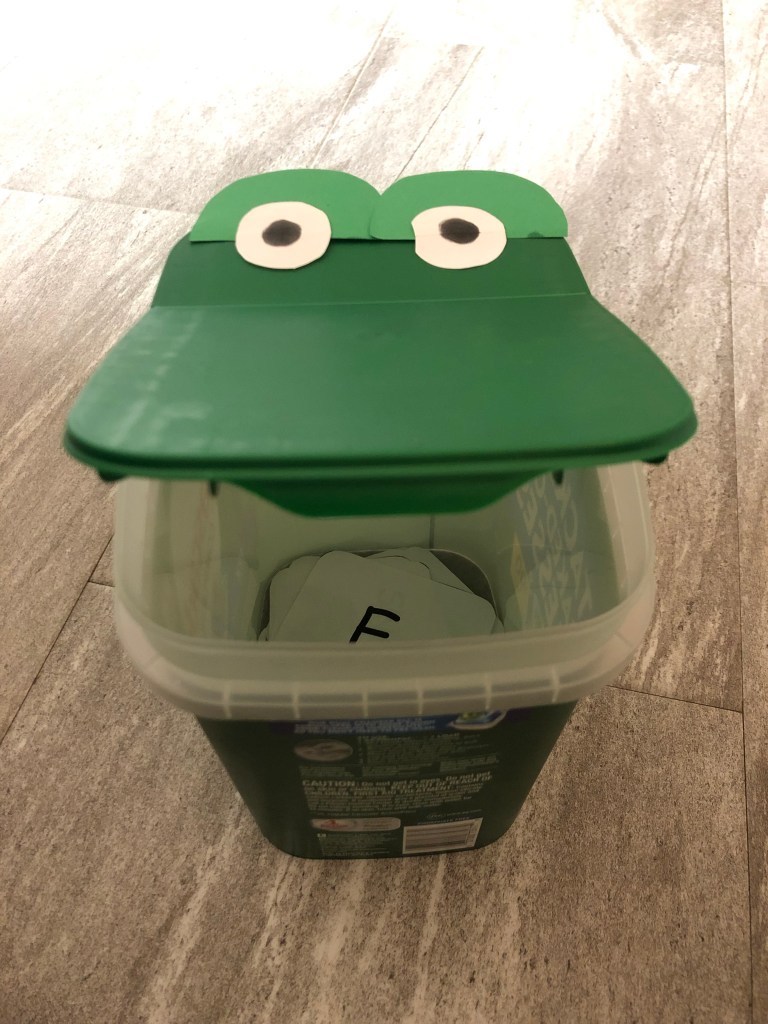
  • Crocodile Bin
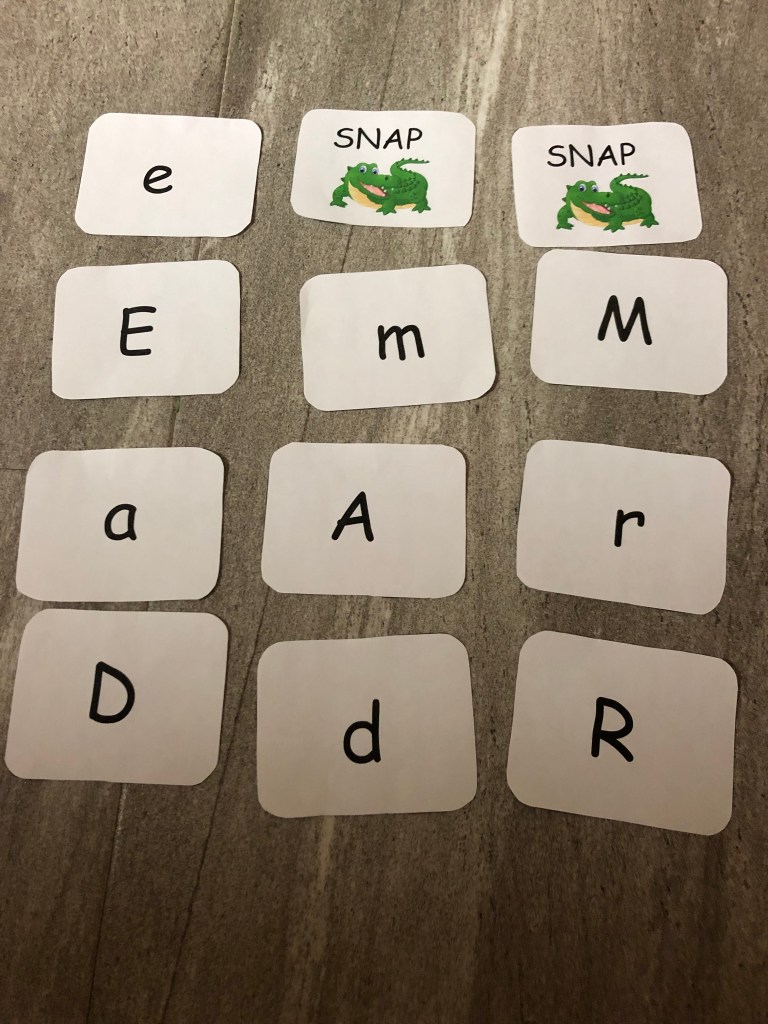
  • Matching cards (Upper/Lower case)
  • Groups

Motivation:

“Hello friends! Today for our small groups, we are going to play a little game. How many of you have seen an crocodile?” Students respond. “Meet my friend Dilly the crocodile!” Show students the crocodile bin. “We have been learning a lot about our alphabet. Most recently we have learned about upper and lower case letters! Dilly wants to play a wonderful game with you today called crocodile snap so he can see how smart all of our friends are!”

Procedure:

  1. To begin, the teacher will show the crocodile bin. The teacher will show the students that the cards will be inside of the crocodile bin and their job is to reach into the bin and pull out a card.
  2. Once the students pull out the card from the crocodiles mouth, they will lay the card on the table, say the letter, and then it is the next persons turn. The next student will reach into the crocodiles mouth and pull out a card. The student needs to determine if the card is an Upper case or a Lower case letter, and identify whether or not the card matches on on the table.
  3. If the card matches, they place it next to the match and its the next persons turn. The group is able to help out the student if they are troubled or need help. This creates a great collaborative activity where students work on social skills while participating in the game.
  4. If the students grab a SNAP! card, the whole group takes their arms and snaps them together like a crocodile mouth, saying “SNAP!” Once this happens all the cards get “eaten” by the crocodile again, shaken up, and the process starts over.
  5. The game goes on until all of the matching cards are placed together or until the time is up.

Chart Project

Standards:

0.3.0.2 Demonstrate understanding of spoken words, syllables, and sounds (phonemes).

  1. Recognize and produce rhyming words.

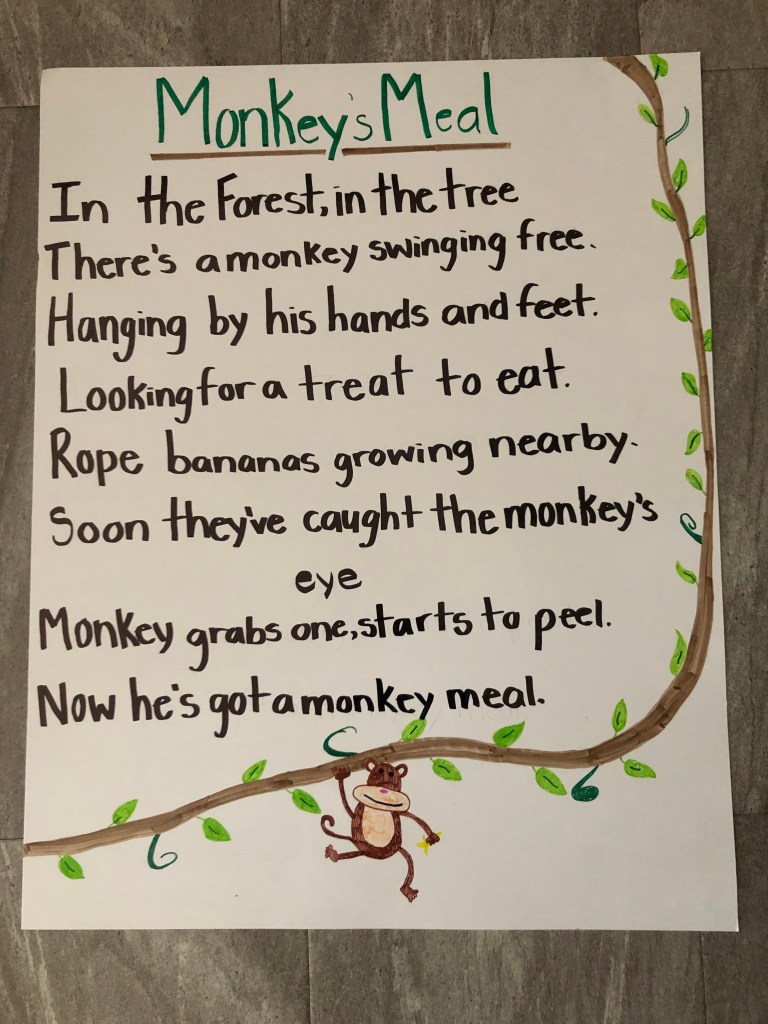
Rationale: For this chart project, the poem I chose has rhyming words. My main focus for this chart and for the activity following the chart is based on rhyming words to build their phonemic awareness. The activity could be done as a small group activity, a partner activity, or individually during reading workshop time.

Materials:

  • Anchor Chart with Poem
  • Pointer
  • Marker/Sticky notes/stickers
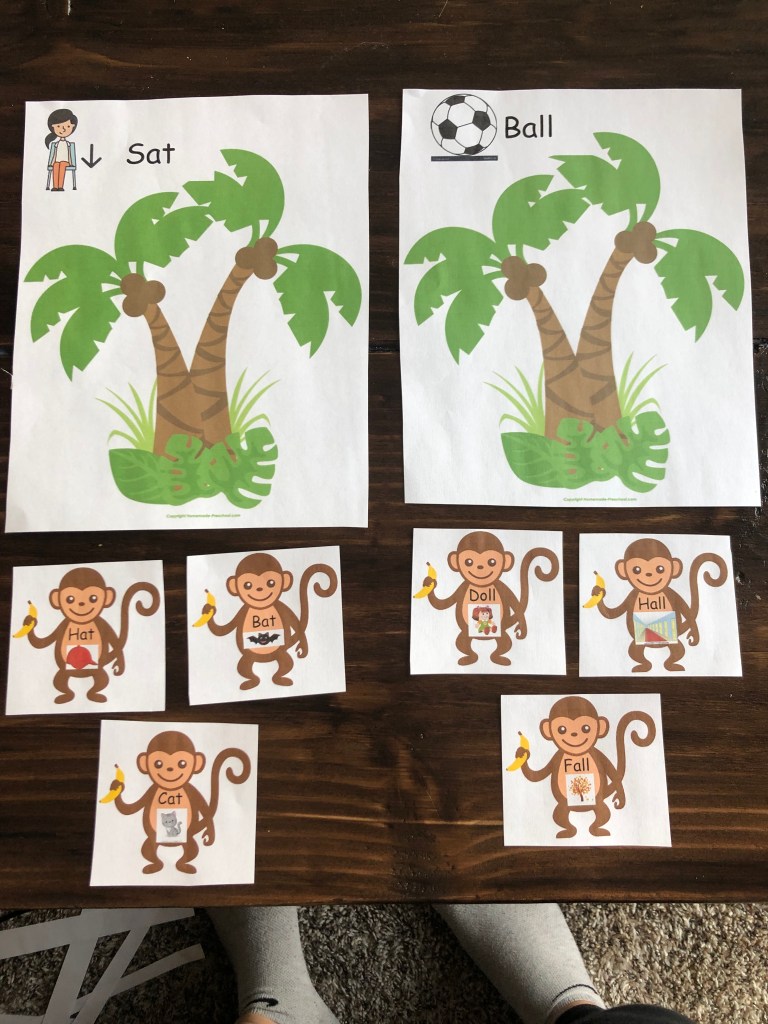
  • Rhyming word sort
  • Chart paper to cover portions of the chart

Motivation:

To begin, I will have the students close their eyes and imagine they are in a jungle. Birds are chirping, frogs are croaking, elephants are making noise, etc. I will then have them picture monkeys swinging from tree to tree, and vine to vine. I will stop them and say, “wait a minute…what is that I see, a monkey eating in a tree?” I will then ask what kind of food they think monkeys eat. They will use what they know about monkeys to take a guess at what monkeys eat.

Steps to complete:

  1. I will have the chart paper displayed with another chart paper covering the poem. I will then move the chart paper down until only the poems TITLE is showing. I will then have the students think, pair, and share what they think the poem will be about.
  2. We will then begin talking about a couple things regarding poems. I will remove the top piece of chart paper so the whole poster is showing. Noticing the lines and the sentences, where periods are, how the image helps the poem, etc.

3. I will begin reading the poem straight through. Once we finish it, I will read it again, stopping after every line to talk about things they notice, or any questions they may have.

4. Once we read it after the 2nd time, point out the rhyming words and talk about what rhyming words are. Using either the marker/sticky notes/stickers, identify the words that rhyme and talk about why each of them rhyme.

5. Once the rhyming words are talked about, have students try to think if they know of any rhyming words and pair with the person next to them and share with each other.

6. Depending on the way the literacy time is set up, the next activity could be done independently, in pairs, or during small group/reading workshop time. The students will go off and start working on the word sort.

To make a more interactive small group/reading workshop time, you could have a big tree cut out and laminated and placed on the white board by magnets or tape. The monkeys could be laminated and cut out completely (so no white is showing) and the students can come up the the board and work together to place the words that rhyme somewhere on the tree that it matches with. This is just a larger version of a sort that can be reused for another year.

**The poem came from a website: https://www.poemsearcher.com/topic/monkey

**I created the rhyming word sort myself.

Design a site like this with WordPress.com
Get started